VIETNAM STARTUP EXCHANGE | VSX.ASIA | TOGETHER TO SUCCESS
CHÀO MỪNG GIA NHẬP HỆ SINH THÁI KHỞI NGHIỆP VIỆT NAM
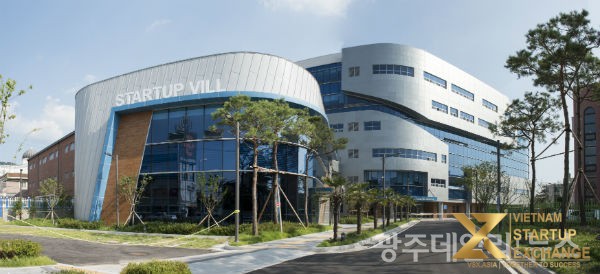
Gwangju Technopark’s legal name in Korean is 재단법인 광주테크노파크. The organization received approval for its legal establishment in December 1998 and officially commenced operations in February 1999 under the name Gwangju–Jeonnam Technopark. It adopted the name Gwangju Technopark in March 2004.
GJTP operates as a non-profit foundation within South Korea’s Technopark system. It serves as a regional hub for industrial development, business support, and technology innovation.
Its headquarters are located at 333 Cheomdangwagi-ro, Buk-gu, Gwangju, South Korea, an area with a strong concentration of science, technology, and research facilities.
GJTP builds collaborative networks among businesses, universities, research institutes, and local government agencies to mobilize resources for industrial development and technological innovation.
Its principal activities include industrial policy planning, research and development, business incubation, pilot production, technology transfer and commercialization, technical infrastructure development, information services, and resource connection.
GJTP’s current vision is to become a specialized industrial and economic organization that fosters globally competitive industries and enterprises.
Its four strategic directions are:
Planning industrial policies, upgrading the regional industrial structure, and identifying new growth engines.
Providing business support tailored to real market needs and different stages of enterprise development.
Building open innovation networks based on collaboration, convergence, and resource sharing.
Strengthening institutional management to support sustainable development.
GJTP works with the city government and specialized organizations to develop medium- and long-term strategies for Gwangju’s nine representative industries. These industries are grouped into three categories.
Semiconductors
Data industry
These emerging sectors are being developed to strengthen Gwangju’s long-term competitiveness and create new drivers of regional economic growth.
Smart mobility and next-generation vehicles
Artificial intelligence
Cultural content
Energy
Medical and healthcare
These sectors combine Gwangju’s established industrial capabilities with new technologies to create higher-value products, services, and business models.
Photonics and home appliances
Smart root manufacturing
These industries have established production capabilities, research infrastructure, and business networks within the region. GJTP supports their continued technological advancement, productivity improvement, and expansion into new applications.
GJTP provides support across multiple stages of enterprise development, from research and product validation to commercialization and market expansion.
Its major support areas include:
Research and technology development
Prototype development and pilot production
Access to equipment, laboratories, and technical infrastructure
Product testing, evaluation, certification, and improvement
Process innovation and smart manufacturing transformation
Technology, management, and business consulting
Workforce training and job creation
Marketing, commercialization, and market development
Connections to guarantees, finance, and public funding programs
Support for startups and growth-stage enterprises
Eligible enterprises may apply to operate in GJTP’s production, testing, incubation, and business support facilities. Resident companies also receive timely information about support programs, access to shared equipment and facilities, and opportunities to join business networking activities.
Throughout its development, GJTP has established and attracted specialized technology support centers in areas such as titanium and special-alloy components, LED and LD packaging testing, electrical and electronic components for next-generation vehicles, home-service robots, and assistive robotics.
Its current infrastructure includes production and business facilities, I-PLEX Gwangju, the Energy Industry Convergence Complex, battery module facilities, senior-friendly industry facilities, the Life Support Robot Center, the Healthcare Robot Demonstration Center, and Gwangju Green Startup Town.
GJTP’s equipment database covers several technology categories, including industrial technology, medical and healthcare, artificial intelligence, smart mobility, and energy. This shared infrastructure enables companies to access specialized technical resources without making substantial upfront investments in their own equipment.
GJTP continues to expand its activities in response to changes in technology, industry, and market demand.
In 2026, its programs included physical AI and humanoid robotics for manufacturing innovation, on-device AI product development, advanced semiconductor packaging validation, AgeTech, smart manufacturing, medical data, and healthcare innovation.
GJTP also supports the testing and certification of AI models, electrical and electronic equipment, healthcare products, and manufacturing technologies. These capabilities help companies improve their solutions, validate practical applications, and prepare products for commercialization.
GJTP has been recognized through multiple evaluations conducted by the South Korean Government and relevant public authorities.
In 2008, it ranked first nationwide in a satisfaction survey of beneficiaries across the country’s Technopark system. From 2010 to 2013, GJTP repeatedly received the highest ratings for institutional management and regional industrial development planning.
In 2023, GJTP received an S rating—the highest level—in the management performance evaluation of South Korea’s 19 Technoparks conducted by the Ministry of SMEs and Startups. The evaluation recognized its leadership, management strategy, resident enterprise growth management, support for priority sectors, and capacity as a regional innovation hub.
More recent achievements include receiving the highest rating in a 2024 program supporting crisis response in SME-concentrated areas, attaining a nationwide S rating for the Smart Factory Deployment and Expansion Program in 2025, and achieving an A rating for three consecutive years in the performance evaluation of regional specialized industry development.
Gwangju Technopark brings together three essential capabilities: industrial development planning, specialized technology infrastructure, and business support across different stages of growth.
Through its network of government agencies, enterprises, universities, and research institutes, GJTP helps translate scientific and technological resources into production capacity, commercially viable products, and business growth. This integrated approach supports the continued development of Gwangju’s strategic industries, strengthens enterprise competitiveness, and expands the region’s capabilities in emerging technology sectors.
Tác giả: Vietnam Startup Exchange, Gia Linh

Ý kiến bạn đọc
Những tin mới hơn
Những tin cũ hơn